Black mark on cricket
Aboriginal caricature a feature of Port Kembla CC

It is difficult to be genuinely shocked by anything in the modern sporting world.
Test match over in two days? That’s just the 19th Century paying a visit.
Rank underdog wins a medal or a final? Ho hum. Someone has to win.
Household name retires without warning? Life goes on. It’s only sport, after all.
I didn’t think it was possible to experience a standstill shock, a moment of complete disbelief, until I visited Wollongong recently.
The NSW town is Bunbury without the charm, a relatively picturesque port set against green hills with a history no more nor less confronting than any other established metropolis around the country.
The reason for the visit was to take part in a veteran cricket tournament, an event that included a visit to neighbouring Port Kembla where the cricket ground, circled by white pickets and set between steepling Hill 60 and golden Fisherman’s Beach, provided one of the national sport’s most sublime settings.
George V Oval was named for the king who claimed the throne only a year or two before the formation of the Port Kembla Cricket Club in 1912.
Port Kembla are known as the Blacks, a nickname shared with the local football and rugby league clubs.
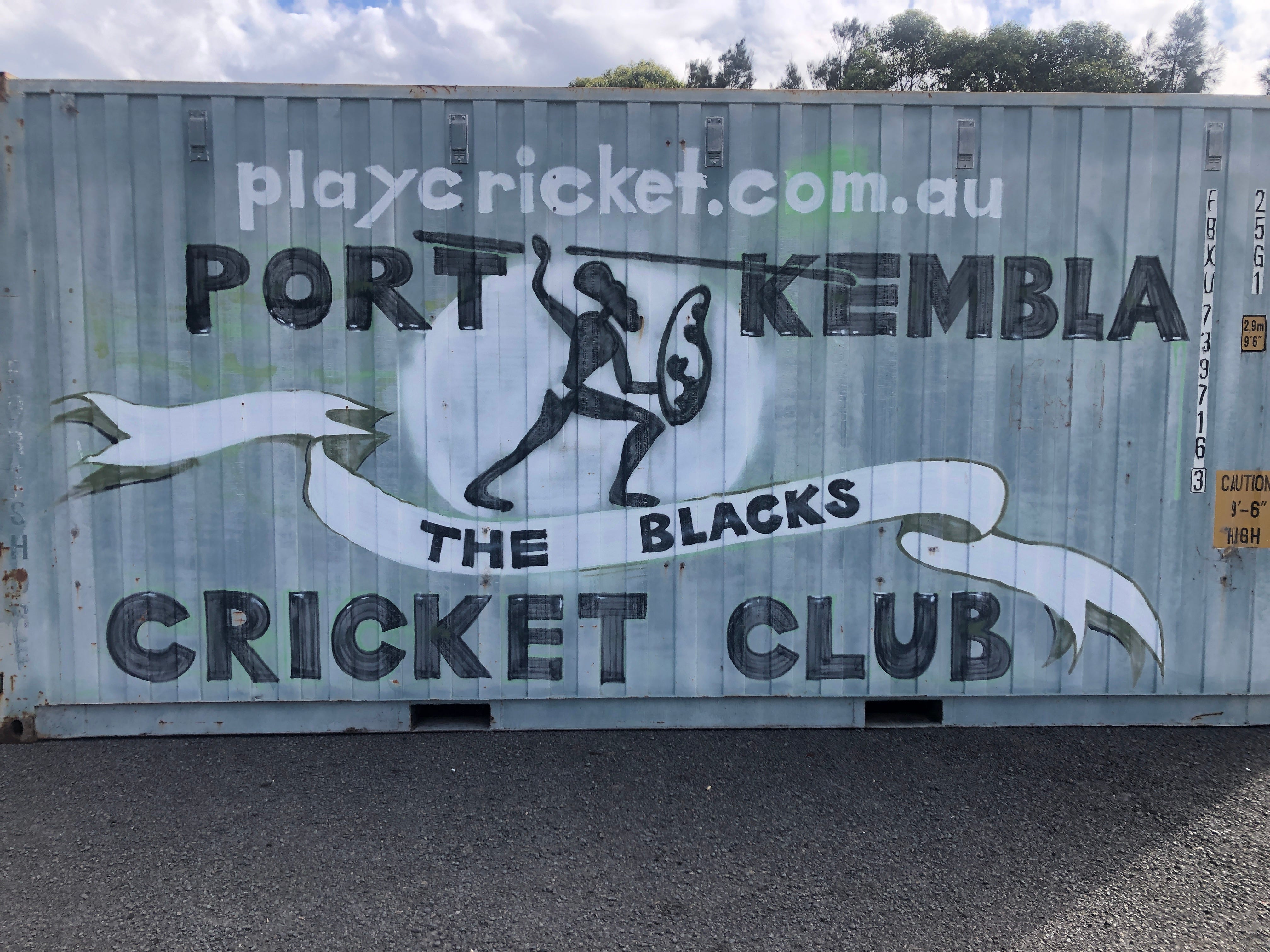
Port Kembla play as the Blacks.
But any thought that the nickname was derived from the club colours or some other anodyne source was dispelled the moment the logo on the side of the clubrooms became apparent.
I was staggered when I saw it. So too several team-mates who were equally stunned by the image before us.
It was a caricature of a mature Aboriginal man with a bushy beard and long hair, armed with a shield and poised to strike – an animal, an enemy? - with a long spear held over his head.
The Blacks? Why not call them the Natives? Or the Abos?
Anyone looking for a reminder of the casual and patronising racism that once pervaded this country need only pop into Port Kembla for a taste.
The shock was two-found.
The images derived from the colonial past were jarring enough, particularly after learning about the torrid Aboriginal history at Hill 60 where generations of permanent inhabitants were forcibly removed in 1941 to make way for a World War II defence battery.
But the greater astonishment came from the realisation that this image and name were obviously acceptable to the people of Port Kembla seemingly frozen in the 1950s and those who came into contact with the cricket club.
That attitude is not widespread and has actually diminished in recent times.
American baseball team Cleveland Indians became the Guardians in 2022 in the aftermath of the growing community and corporate pressure to abandon the original name due to its racist and offensive connotations.
Football power Washington Redskins became the Commanders for the same reason two years earlier.
There was a precedent in that city, though, because the Bullets, the basketball franchise, were rebranded as the Wizards late last century.
That might have been less controversial, with the tourism market apprehensive about what the name and its local connotations meant for nervous visitors rather than worrying about any post-colonial offence it might have caused.
My shock at Port Kembla was shared by a team-mate who wrote a long and eloquent letter to Cricket Australia asking whether it endorsed the club’s confronting presentation.
He also sought an explanation about why the term Blacks was considered acceptable in the modern world when reconciliation between white and Aboriginal Australia remained such a constant challenge.
He has not had a reply from an organisation that says, on its website: “In keeping with our commitment to reconciliation, Cricket Australia acknowledges the traditional owners and custodians of the lands on which we are privileged to play and administer the great game of cricket. We pay our respect to elders past and present.”
Some respect.
Hypocrisy remains at full gallop, too.
Every modern-day cricketer, and athlete in virtually every other sport, knows that to use the adjective “black” on the field would invite a near mandatory suspension for racial vilification.
Darren Lehmann, now an ABC commentator after successful stints as an Australian player and coach, was banned for five matches in 2003 for using the adjective “black” during a brief private outburst, in his own changeroom, after being dismissed against Sri Lanka.
Maybe he should have said it at Port Kembla where it appears okay for a club to use the term in its name and display it in public in the most distasteful and barbaric fashion?
It clearly has not drawn the decades-long attention bestowed on the E.S. “Nigger” Brown Stand at a sporting ground in Toowoomba which survived challenges to the Federal and High courts but could not survive a bulldozer in 2008.
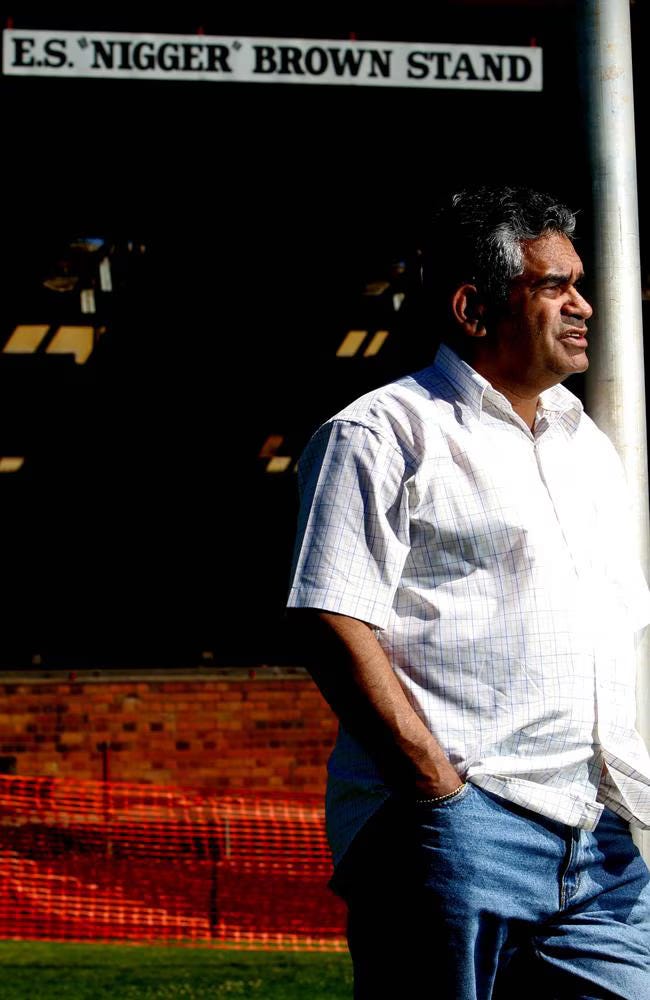
Stephen Hagan fought for years to have the sign removed from this Toowomba stand.
Brown was Toowoomba’s first rugby league international and an influential administrator yet the sport’s insistence on maintaining his nickname, despite activist Stephen Hagan’s claim that it was offensive to generations of Aboriginal people, was repeatedly supported by courts and tribunals.
I would have said it would be impossible to have a Nigger Brown Stand exist today but after visiting George V Oval last month, I am no longer sure about that.
The Australian Test team for the first time last week selected two players with Aboriginal heritage – veteran Scott Boland and debutant Brendan Doggett only discovered their ancestry in their 20s but have since embraced it – but it is difficult to comprehend a sport that celebrated their achievement with such fervour is also home to a club that plays under such a banner.
Did not this issue in Australia. Thanks compressive and hard hitting article
Get over it - it's a bit of a compliment.